
Sign up to our newsletter
Get the latest news and views from Healthcare Central London, our member Practices and partners.
Views
21 Jan 2026
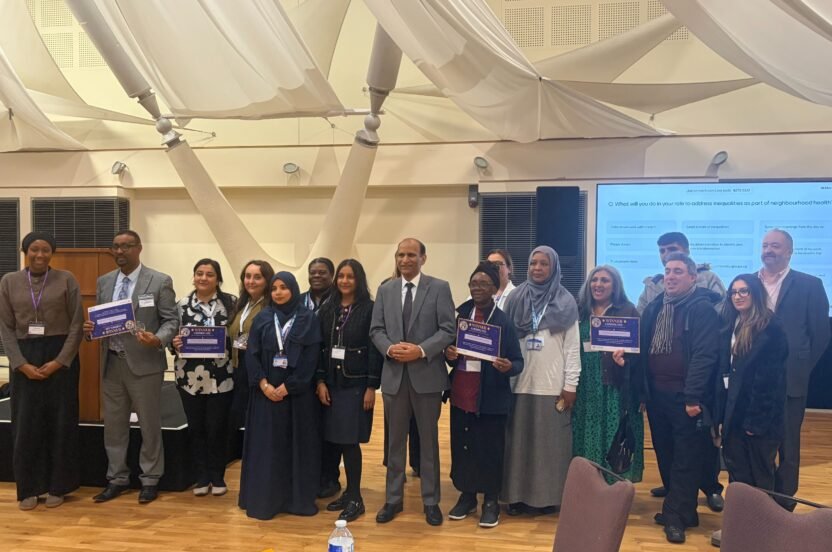
Proof in Practice was a live, one-day event, hosted by Healthcare Central London (HCL), bringing together researchers, clinicians, academics and industry leaders to explore Primary Care research.
The first session of our Proof in Practice conference set the tone for the day. Primary Care is not just a setting for research; it is the future of equitable health.

Chaired by Xi Ye, Head of Strategy for Research Engagement and Inclusion at the NIHR North London RRDN, the panel brought together leaders who understand Primary Care from every angle:
Together, they explored what it will take to expand research in Primary Care and why it matters more than ever.
The panel opened with the reality many of us already know: access remains a major challenge.
Anna Charles shared insights from recent King’s Fund research, highlighting the scale of the problem:
While the NHS App continues to grow, the panel agreed that digital routes alone will not close the gap.
“We need a hybrid model,” Anna said. This means combining digital access with skills training, community support and non-digital routes for people who are digitally excluded or experiencing rough sleeping.
Primary Care sits at the intersection of medicine and the wider determinants of health.
The panel reflected on the cultural and social realities clinicians encounter every day, from culturally influenced vaccine hesitancy to complex life circumstances that medical care alone cannot resolve.
Despite these challenges, 26% of people who sign up to take part in research do so through Primary Care, highlighting the trust and reach of the setting. 2

For some Practices, research still feels like something reserved for academic centres.
Dr Chatsuda Chierakul acknowledged this perception gap and pointed out a practical barrier: Primary Care often needs initial support to get going. Most Practices simply do not have the equipment or infrastructure that standard GP contracts cover.
But both she and Professor Phil Evans emphasised that NIHR structures are evolving quickly, with:
“It is about delivering research that benefits patients,” Professor Evans said. “It improves patient care, and we need to challenge the myth that research is only for large academic centres.”

For GPs and
Practices considering their first step into research, the panel had a clear message: you do not have to start big.
Practical advice included:

Dr David Mummery outlined how accessible training has become, including:
“Anyone can be an investigator,” he said. “Choose something that interests you. Start small, and once you are in the system you will naturally hear about new opportunities.”
Digital exclusion was a recurring theme, not as a side issue but as a major barrier to equitable research.
Community Health and Wellbeing Workers (CHWWs) were highlighted as an important resource. Their trusted relationships and outreach work help connect communities that are often under-represented in research.
HCL shared examples of how CHWWs have strengthened engagement, particularly through sustained face-to-face work.
The panel reflected on how Primary Care demonstrated its ability to deliver at scale during the pandemic. This has increased confidence across the life sciences sector.
HCL is now an affiliate partner of Paddington Life Sciences, bringing leading innovation directly into Practices.
Despite this progress, there is still room to grow. Fifty-six percent of Practices deliver research, but only six percent are involved in commercial research2. Expanding this is a current priority for the NIHR.
Trust remains central to research participation.
Even after consenting elsewhere, many patients still choose to check decisions with their GP, which underlines the strength of the Primary Care relationship.
Practices can use this position to support research by:
With large patient lists and data-sharing agreements, Practices can also quickly and ethically identify suitable cohorts for studies.
The session closed with a clear message: research must be part of the system from the outset rather than something added later.
From improving equity to strengthening community relationships, Primary Care is uniquely placed to deliver research that reflects the real lives and needs of patients.
The infrastructure exists and the enthusiasm is growing. As this panel showed, the next step is ensuring more Practices feel supported and confident to take part.
Keep an eye out for more reports from the conference coming soon.
If you’d like to join the mailing list for future events or speak to the Healthcare Central London research team about collaboration opportunities, please email. HCL.Trials@NHS.net
Register your interest using the form below:
Get the latest news and views from Healthcare Central London, our member Practices and partners.