
Sign up to our newsletter
Get the latest news and views from Healthcare Central London, our member Practices and partners.
News
14 Nov 2025
Antimicrobial Resistance (AMR) occurs when bacteria, viruses, fungi and parasites no longer respond to antimicrobial agents. As a result of drug resistance, antibiotics and other antimicrobial agents become ineffective and infections become difficult or impossible to treat, increasing the risk of disease spread, severe illness and death.
The World Health Organisation (WHO) is running the World AMR Awareness Week (WAAW) 2025 between 18th – 24th November 2025 to help address the rising threat antimicrobial resistance presents to the world.
The theme for this year’s campaign is “Act Now: Protect Our Present, Secure Our Future”.
The situation is more critical than it appears.
The Global Research on Antimicrobial Resistance (GRAM) Project detailed that resistance to antibiotics led to at least one million deaths each year since 1990 with a projection that drug-resistant infections could claim more than 39 million lives between now and 2050.
The researchers found that AMR deaths among children declined by 50% but rose in people aged 70 years and over by more than 80%.
The full article was published in the Lancet and is available here.
It’s not just a number—it’s someone’s life.
Behind every statistic is a person facing real struggles:
💊 Limited treatment options
🏥 Long hospital stays
💸 Lost income & medical debt
💔 Grief and loss
These burdens add up—and they can affect anyone. Even a minor injury or routine infection could escalate unexpectedly. For those with conditions like cancer, HIV or diabetes, an untreatable infection can become a dangerous second threat.
Please watch this video for a patient story on the impact of AMR:
In the UK, national WAAW activities are led by the UKHSA and NHS England.
A one year progress report on the UK 2024 to 2029 AMR national action plan published by UKHSA highlights the impact of years of focussed targets, education and training and behaviour change in this area.
Specific examples are:
a. 1.1 million fewer antibiotic prescriptions were dispensed from general practice in England in 2023- 2024 compared with the previous year
b. 10% of antibiotics in primary care are consumed by 0.5% of patients who experience 10 or more acute episodes of infection per year
Given the findings of the GRAM study however, it is imperative that we continue to build on this positive momentum.
The figure below demonstrates the breadth of actions planned within the national 5 year action plan:
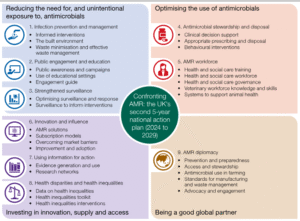
Two themes where primary care can have an immediate impact are –
1. Reducing the need for and unintentional exposure to antimicrobials
Encouraging good infection prevention techniques (e.g. hand washing, vaccination etc.) within the health service and with patients will reduce the need for antimicrobials in the first place. We have an opportunity to engage with and educate the public on appropriate use of antimicrobials so that they are not demanded inappropriately
2. Optimising the use of antimicrobials
Following clinical guidance and best practice as well as supporting patients to self-care are important strategies primary care teams can implement
All healthcare professionals are encouraged to get involved in these activities.
The HCL Clinical Pharmacy team are committed to taking a number of actions in line with the World Antibiotic Awareness Week (WAAW) 2025. As a team, will:
Get the latest news and views from Healthcare Central London, our member Practices and partners.