
Sign up to our newsletter
Get the latest news and views from Healthcare Central London, our member Practices and partners.
News
18 Mar 2026
Following the meningitis outbreak in the Kent area, we understand this may be worrying for patients.
Please find below more information about the infection, prevention and vaccination.
What is meningitis?
Meningitis is a serious condition where the protective layers (meninges) around the brain and spinal cord become inflamed.
It has many causes, such as different germs, including bacteria, viruses, and fungi. In the UK, most cases are due to bacteria or viruses. Some of the bacteria that cause meningitis can also lead to septicaemia (blood poisoning), and both conditions can result in sepsis, which is life-threatening.
What are the symptoms of meningitis?
Early symptoms – such as vomiting, fever, aches, muscle pain, cold hands and feet and headaches – can look similar to common illnesses like colds or flu. But someone with meningitis or septicaemia will usually become seriously ill in a matter of hours. That’s why it’s crucial to keep checking on anyone who is unwell.
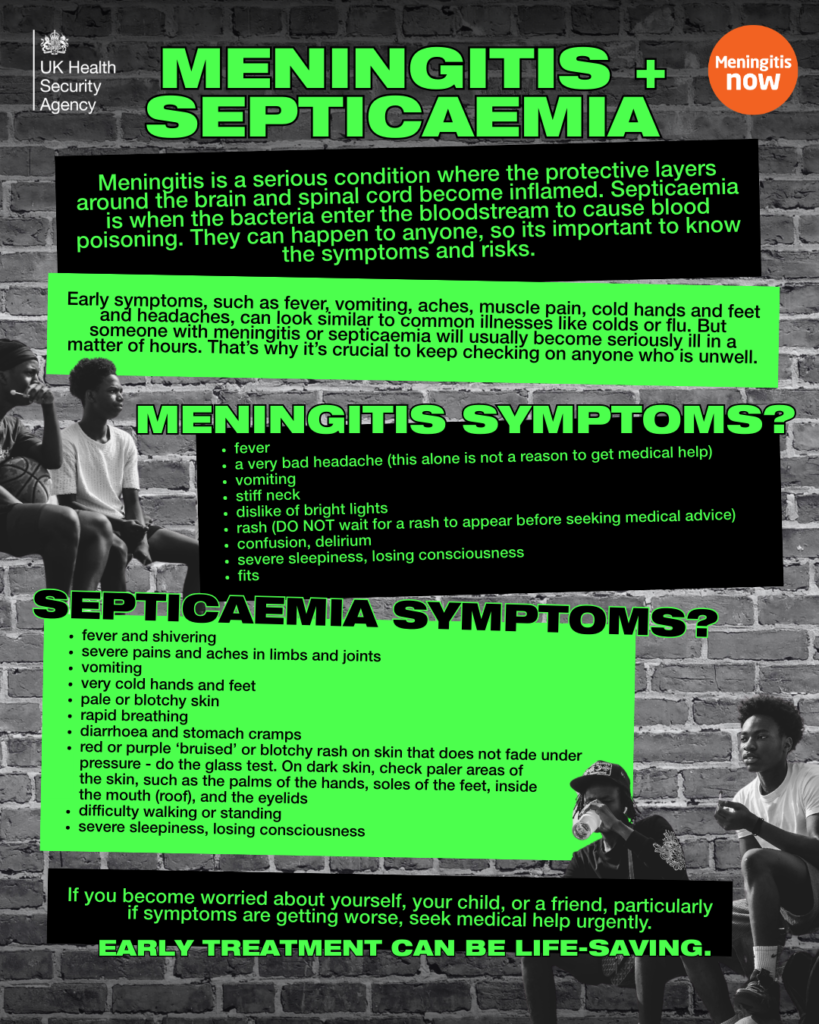
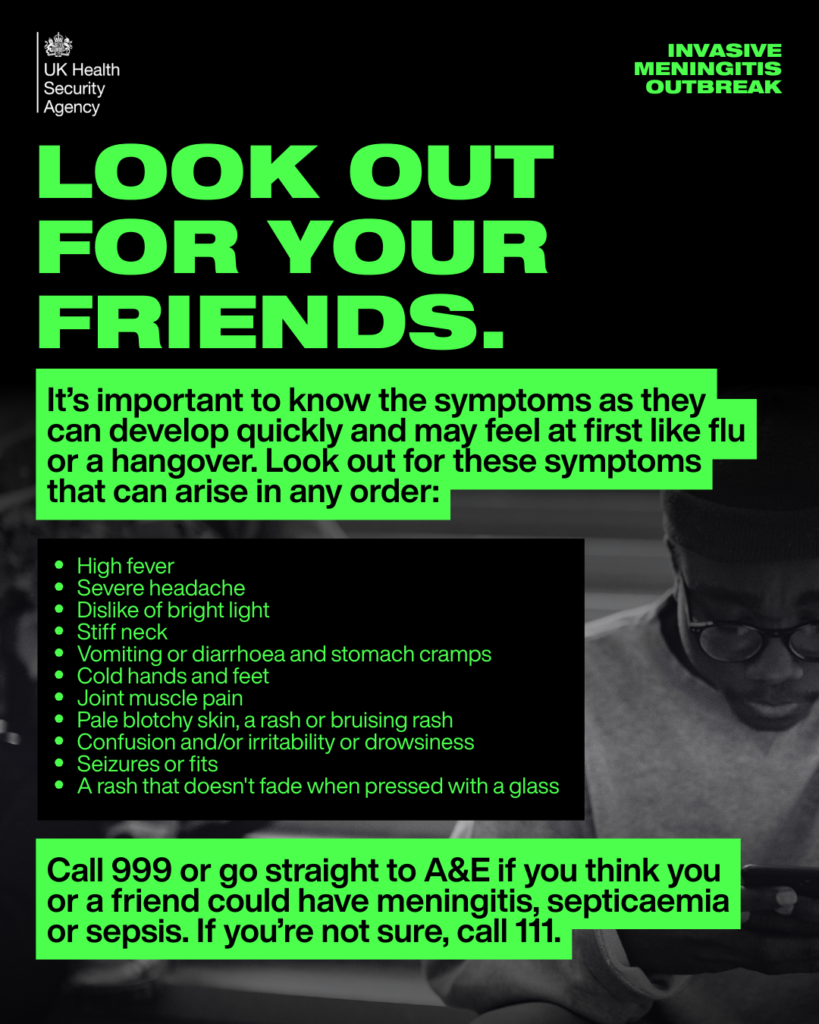
Symptoms can appear in any order and some may not happen at all. For meningitis, common signs and symptoms include:
Read this article for more information about the infection and its symptoms.
Can meningitis be prevented?
Several vaccines offered free of charge by the NHS can help protect against certain causes of meningitis and septicaemia:
The MenB vaccine does not protect against all MenB bacterium types. This is why we always raise awareness of the signs of symptoms of meningitis alongside the available vaccines.
Within your area, there are currently no additional meningitis vaccination recommendations outside of this vaccination schedule.
Am I protected from MenB by childhood vaccines (MenACWY)?
The MenB vaccine was added to the NHS immunisation schedule for infants in 2015, providing protection for babies and young children in the UK. It is separate from the MenACWY.
If you are a teenager or young adult born before 1 May 2015, you will not have received the MenB vaccine as part of the NHS schedule.
What should I do if I’ve missed my meningitis vaccine?
To get the most benefit, it is important for you or your child to have your vaccines when they are offered or as close to that time as possible. Young children who have missed one or more dose of the MenB vaccine can have this free of charge before their second birthday and missed MMR or MMRV vaccine doses can be given at any age.
Teenagers can arrange to have vaccines they have missed. This is especially important before starting university or college. If that’s not possible, they should make arrangements with their new GP as soon as they can after term begins. All GP practices should be able to offer free missed MenACWY to students who are under 25 years as well as MMR vaccines to eligible students. International students in the same age group are also eligible for these routine vaccines.
If you were born before 1 May 2015, there is no NHS catch up programme for the MenB vaccine.
Can I have the MenB vaccine privately?
The MenB vaccine can be accessed privately through high street pharmacies, private GP providers and travel clinics. For those aged over 2 years, the vaccination course consists of 2 doses.
Where can I find out more trusted information?
Further information on the signs and symptoms can be found within this UKHSA blog and on the NHS Meningitis condition overview page.
Or read this leaflet or view the following posters.
Get the latest news and views from Healthcare Central London, our member Practices and partners.